It seems more people are trying to find ways to get out and enjoy the natural world, as limitations to social gathering and activities continue. One way to enjoy nature without even leaving your home is to bring the wild critters to you. Feeding birds has been practiced for many generations, but today, we know a lot more about our local birds and their needs and can provide them much more beneficial fare than our grandparents did. If your home's listed among
Danville homes for sale, and you're biding your time until it sells, you might get the kids together and teach them the right way to feed birds. It's easy, but knowing a few basics can make feeding much more beneficial for our feathered friends.
Feeding Through the Seasons
A key lesson of bird feeding is that different species will come and go as the seasons pass. Some birds are migratory and are passing through in spring and fall; others move into the city for nesting and then leave for the countryside as the season changes. Some birds move to higher elevations, such as the mountains, as the season gets warmer. Birds have different feeding habits, so you need to know what species regularly visit backyards in your area and when. Your local birdseed specialty store or the local
Audubon Society may be able to advise you.
Bird Feeding Habits
Eurasian house finches (commonly known as "English sparrows," although they are neither English nor sparrows) feed at feeders as well as on the ground. Cardinals, towhees, sparrow species, grosbeaks, blue jays, and doves are also ground feeders, but if they have room at a feeder, they'll use it. One important point for ground-feeding species: Cats take a tremendous toll on wild birds, so if you have any lurking in your yard, you may want to elevate feeders so the birds will not expose themselves to harm on the ground. You could buy a
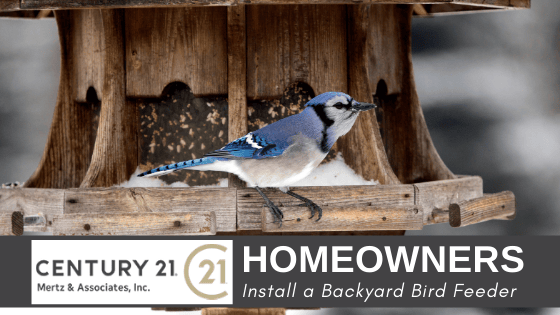
covered feeder (keeps the seed dry from rain and snow and gives the birds a bit of shelter while feeding) and set it up on a table to give them some safety from felines. Other common backyard birds such as Carolina chickadees do well with grabbing black oil sunflower seeds from squirrel-proof feeders (these feeders are worth the extra cost, so the squirrels don't rob you of all your birdseed). Goldfinches, meanwhile, like to cling to thistle socks or feeders that dispense nyjer thistle.
Birdseed
A word about birdseed: Invest in quality bird seed if you can afford it. Go easy on the millet, which pads cheap bags of birdseed, as the English sparrows favor it. Other species will eat it, but if you want to cut down on sparrows' visitations, withhold the millet for a few days. Cardinals, sparrows, and blue jays like black-oil sunflower seeds and safflower seeds. The black-oil shells are easier to break with their beaks than the striped sunflower seeds. It's best to disperse the sunflower seeds with the shell on, as the uneaten kernels may mildew, and the shell will protect the kernels for a few days. Attract woodpeckers with suet dispensed from baskets. A word of warning: Never give birds bread crumbs. Bread provides no nutritious sustenance for birds and can lead to malnutrition. Enjoy feeding your birds.