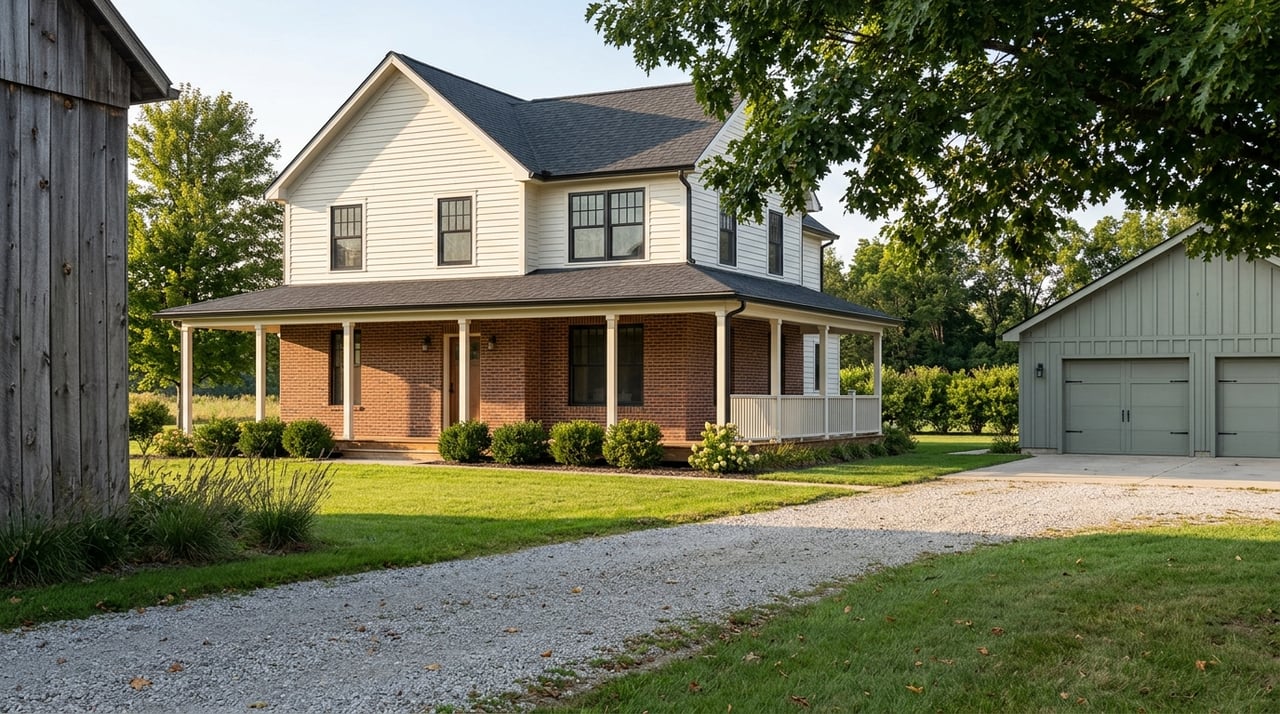
Buying Land Or A Small Farm In Columbia County PA
June 4, 2026
June 4, 2026
If you have ever looked at a beautiful piece of land in Columbia County and thought, “This could be perfect,” you are not alone. Buying land or a small farm can open the door to building, gardening, raising animals, or simply enjoying more space, but rural properties come with questions you do not face on a typical home purchase. This guide will help you understand what matters most in Columbia County so you can make a smarter, more confident decision. Let’s dive in.
Columbia County offers more than just open space. According to the USDA’s 2022 Census of Agriculture, the county had 688 farms covering 92,500 acres, with an average farm size of 134 acres. The farm mix included both crop and livestock operations, which means buyers may come across very different types of land depending on the area and intended use.
That matters because one property may be better suited for pasture, while another may be more useful for row crops, a homesite, or a small hobby farm. The county also has a strong family-farm presence, with 94% of farms identified as family farms. For buyers, that adds to the local character and helps explain why many parcels are unique rather than cookie-cutter.
One of the biggest mistakes land buyers make is assuming price should rise in a straight line with acreage. In Columbia County, current listing examples show just how wide the spread can be, from a half-acre lot listed at $6,400 to larger tracts priced in the hundreds of thousands or more. That range tells you something important: acreage is only one piece of value.
A 10-acre parcel with road frontage, usable topography, and utility access may be far more valuable than a larger tract with limited access or use restrictions. Flood exposure, preservation status, and development potential can all shift value quickly. This is where local guidance and strong valuation insight become especially important.
In Columbia County, land-use rules are local. You cannot assume the same zoning or subdivision standards apply across the county, because townships and boroughs may have their own ordinances. Before you get too far into a property search, you should confirm what the specific municipality allows.
This step is especially important if you plan to build a home, split a parcel, keep animals, or create a small farm operation. A parcel that looks ideal on paper may have limits that affect what you can actually do with it. Buildability and future subdivision potential should always be checked municipality by municipality.
Before you make an offer, be clear about the use you are underwriting. Are you buying a future house site, a hobby farm, pasture ground, timberland, hunting land, or a tract you hope to divide later? The answer changes the due diligence you need.
A parcel’s allowed use, deed restrictions, and preservation status can matter more than the total number of acres. If your plans do not match the rules attached to the land, the property may not be the right fit, even if the setting is appealing.
Land deals often turn on details that are easy to miss in an online listing. Columbia County offers public tools that can help buyers review parcel information, tax and assessment data, and recorded documents. These records can help you verify boundaries, deed history, and whether recorded maps or easements affect the property.
Legal access is one of the first items to confirm. A tract may appear reachable, but you still need to know whether access is deeded and reliable. Rights-of-way or other recorded easements can limit how you use the land or where you place improvements.
If a parcel is near a river, creek, or low-lying area, floodplain review should happen early. Columbia County notes support for municipal floodplain management, and FEMA flood maps remain the official public source for identifying flood hazards. For many rural buyers, this should be part of the first round of due diligence, not a late surprise.
Flood status can affect where you build, what it costs to improve the site, and how the land functions season to season. It can also influence long-term resale appeal. Even if only part of the parcel is affected, that still matters when you are paying for usable land.
With vacant land and small farms, some of the biggest questions are underground or out of sight. Soil conditions, water availability, and septic feasibility often determine whether the land can truly support your plans. A property that looks great from the road may not work the way you expect once testing begins.
Penn State Extension’s farmland checklist highlights the importance of soil test results, water-quality information, and wastewater or septic design plans and permits. If you are considering a homesite, a hobby farm, or land for animals, these are not minor details. They help separate attractive acreage from practical acreage.
This is a key point for Columbia County buyers. A parcel may advertise a certain number of acres, but not all of them may be equally functional for building, farming, or pasture. Steep topography, wet areas, floodplain constraints, and poor soil conditions can reduce what is truly usable.
That does not mean the property is a bad buy. It simply means you need to value it based on real-world use, not just map size.
For buyers looking at small farms or agricultural land, Pennsylvania’s Clean & Green program is worth understanding. The program taxes qualifying land based on use value rather than fair market value, which can reduce the tax burden. Agricultural-use parcels may qualify below 10 acres if they can generate at least $2,000 annually in farm income.
There is an important tradeoff, though. If the land use changes, rollback taxes can apply for seven years plus 6% interest. The general application deadline is June 1, so timing and eligibility should be reviewed carefully.
Agricultural Security Areas, or ASAs, can also affect how farmland is treated. Pennsylvania says ASAs may include qualifying parcels of at least 10 acres or parcels capable of producing at least $2,000 annually in agricultural products, as part of a larger enrolled area. These areas receive special consideration involving local ordinances and nuisance lawsuits related to normal farming activities.
If you are buying with agricultural use in mind, ASA status may be relevant. It does not automatically make a property better or worse, but it does shape how the parcel fits into the local agricultural framework.
Columbia County has an active farmland-preservation footprint. The Columbia County Conservation District reports 41 preserved farm easements totaling about 4,496 acres. These applications are ranked in part through a LESA process that considers soils, site quality, and local factors tied to long-term farm viability.
For buyers, this means you should never assume all acreage carries the same future flexibility. A preserved or easement-encumbered tract should be evaluated differently from an unencumbered parcel. If your long-term goal includes development or major changes in use, preservation status is a major issue to review before you commit.
Your ongoing costs may look very different from one municipality to another. Columbia County’s millage sheet shows varying tax rates by township or borough, school district, and special taxes. In plain terms, two similar-looking parcels in different parts of the county can carry different holding costs.
Assessment also matters. The county assessment office states that assessments are based on market value, and it notes that owners can support value with completed sales of similar properties or by hiring an appraiser. For land, good comparisons must account for access, frontage, utilities, topography, flood exposure, and permitted use.
Some rural Pennsylvania properties may also face municipal stormwater charges. These fees can be tied to impervious surfaces such as barns, sheds, paved drives, and even packed gravel lanes. If a property already has improvements, or if you plan to add them, this is worth asking about before closing.
When you are buying land or a small farm in Columbia County, these are some of the most important questions to answer early:
These questions can save you from buying the wrong parcel for the right-looking price.
Land and small-farm purchases are rarely simple. In Columbia County, two parcels with similar acreage can have very different values because of frontage, access, utility readiness, flood status, topography, or restrictions tied to preservation and use. That is why a broker-only estimate or an acreage-only rule of thumb can miss the mark.
Working with a local team that understands both real estate and valuation can give you a clearer picture before you act. That kind of guidance is especially useful when you are comparing non-standard properties, looking at mixed-use potential, or trying to avoid costly assumptions.
If you are thinking about buying land or a small farm in Columbia County, having experienced local guidance can make the process much easier. Scott M. Mertz brings local market knowledge, land experience, and valuation insight to help you evaluate property with confidence.

Connect with CENTURY 21 Mertz & Associates today to explore homes, investment opportunities, and expert guidance in Danville and Lewisburg. Let our local team help you achieve your real estate goals.